- 3 min reading time
State office detects dangerous plasticisers in children - how dangerous is PVC flooring?
In a study of around 250 children, researchers found a now banned plasticiser in the urine samples. The Federal Environment Agency reacted with alarm and commissioned the European Environment and Chemicals Agency to search for the trigger. A prime suspect has already been identified.
The plasticiser found is known by the abbreviation DnHexP and has been on the EU's list of substances of very high concern since 2013. It has been banned from use since 2023. Nevertheless, products containing this and other plasticisers still appear to be in circulation. The NRW State Agency for Nature, Environment and Consumer Protection (LANUV) was able to detect the hazardous substance in children's urine samples. Compared to the last investigation three years ago, the concentration of the plasticiser was found to be ten times higher.
Plasticisers in sun cream?
Samples from the summer appeared to be more contaminated than those from other seasons. The Federal Environment Agency is now investigating whether sunscreen could be the cause. Plasticisers are used for the plastic tubes or bottles of sun creams. Over time, the substances can migrate from the packaging to the creams or lotions. The reason for this is the chemical composition of the plasticisers. They are not firmly bonded to the plastic, but only dissolved in it - like oil in a sponge. This means that over time the plasticiser evaporates from the plastic. This is particularly true if the plastic is already brittle or fragile.
Where else are plasticisers lurking?
The main use of plasticisers is to soften PVC. In the past, packaging containing PVC was even used for foodstuffs. For health reasons, this is no longer permitted today. The LANUV names floor coverings, profiles, cables and films as the most important applications for plasticisers. The films are mainly used in packaging for large-scale transport - for example in the wrapping of stacked Euro pallets. However, most people encounter plasticisers under their feet - often without realising it.
Federal Environment Agency warns against PVC flooring
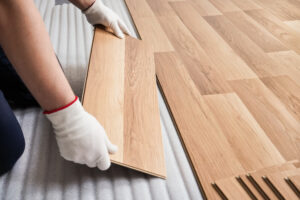
PVC flooring continues to enjoy great popularity due to its low cost. However, cheap products come at a price: whether it is designer flooring, vinyl flooring or PVC flooring - as long as the product contains PVC, it contains plasticisers. For this reason the Federal Environment Agency advises against PVC flooring. There is no ban or legal regulation for plasticisers used in the processing of floor coverings. So far, only children's toys and food packaging are affected by the ban. However Scientifically proventhat the harmful substances are released into the room air over time. The installation of PVC flooring in nurseries or households with children is particularly worrying, as children are more at risk and have more physical contact with the floor. However, the flooring in other households is also permanently contaminated by furniture and foot traffic - which causes the chemicals to evaporate. A ban on PVC has been under discussion in Germany and the EU for some time - a decision is still pending.
No precise information on pollutants
There is no clarity for consumers. Many are unaware of the danger posed by PVC flooring, just as they are unaware of the existence of plasticisers in their flooring. The European Society for Healthy Building and Indoor Hygiene (EGGBI) has been reporting on the PVC problem for years. The society writes: "Increasingly, manufacturers are endeavouring to replace particularly harmful plasticisers with safer ones. In most cases, however, they are not prepared to disclose precise information about these substitutes. In principle, most manufacturers refuse to provide credible, comprehensive pollutant test reports."
How can I protect myself from plasticisers?
The manufacturers' secrecy makes it difficult to make an informed purchase. There is no general labelling obligation for all plasticisers contained in the product. This means that even an inconspicuous design floor can turn out to be a PVC product. Consumer protection recommends relying on testing by renowned institutions. The ministry cites the Blue Angel and the eco-INSTITUT seal as particularly trustworthy. Both organisations do not award their seals to floor coverings containing PVC for good reason. For consumers, this means that they can buy products with one or both seals without hesitation, safe in the knowledge that they do not contain PVC, plasticisers or phthalates.
Our CERAMINⓇ Floor coverings have emerged because there are not enough good and sustainable alternatives to PVC products. CERAMINⓇ is our own material, which is made from recycled plastic and makes our wall and floor coverings robust and recyclable. And completely without harmful substances such as PVC, plasticisers or phthalates. This is confirmed by the Blue Angel and eco-INSTITUT awards on our products. If you would also like to furnish your home with healthy floor coverings, please take a look at our collections.